Dear zebrafish researchers,
ZF-HEALTH is proud to announce the workshop on "Zebrafish Models in Translational Medicine" which will take place in Courcelles-sur-Yvette, France, on October 2-4, 2013.
This international meeting is organized by the EU FP7 Integrated Project ZF-HEALTH "Zebrafish Regulomics for Human Health". The aims of the meeting are to provide a stimulating debate on the current knowledge and approaches relevant to long term human pathologies, thanks to the contributions of renowned experts in the medical field; and to pave the way to novel approaches and collaborations using animal models. Within the past decades, advances in understanding the biology of long term human pathologies have been made possible in large part thanks to the development of molecular genetics and cellular biology tools. In a parallel way, the emergence of new animal models, such as zebrafish, has allowed to develop in vivo paradigms for human pathologies, based on the conservation of the genome and the particular technical qualities of the model, including easy in vivo imaging, embryo/genome manipulation and simplified large scale chemical/drug testing.
Please find attached a flyer with information on the speakers, themes and deadlines for application to register. A web site for registration will be available by the beginning of June.
On behalf of the Organizing Committee
Jana Maier
Karlsruhe Institute of Technology (KIT)
E-mail: jana.maier@kit.edu
Flyer (PDF)
On behalf of the ZF-HEALTH consortium and EuFishBioMed COST action partners we would like to invite participants to the forthcoming workshop on
Automation methods for zebrafish research
This workshop will be held at the University of Leiden, NL, 18-19 April 2013 (see Invitation attached)
Please register and upload your abstract at: www.lifesciencemethods.com/#menu=workshop
Spaces are limited, so please register soon to avoid disappointment.
Deadline for registration: 18th of March 2013
Organising Committee:
Herman Spaink (University of Leiden, NL), Uwe Strähle (KIT, Karlsruhe, Germany), Jan de Sonneville (Life Science Methods BV, Leiden, NL), Christian Pylatiuk (KIT, Karlsruhe, Germany).
E-mail contact: workshop_2013@lifesciencemethods.com
Invitation (DOC)
Flyer (PDF)
On behalf of the ZF-HEALTH consortium and EuFishBioMed COST action partners we would like to invite participants to the forthcoming workshop on
Genomics and high throughput sequencing technologies with the zebrafish model
This workshop will be held at the Møller Centre, University of Cambridge, UK between 10-11 December 2012.
Enquiries, registration forms and poster abstracts should be sent to:
Fiona Wardle fiona.wardle@kcl.ac.uk, Ferenc Mueller f.mueller@bham.ac.uk
Spaces are limited, so please register soon to avoid disappointment.
Please note that the deadline is extended to November 23, 2012!
Poster (PDF)
Registration form (DOCX)
Preliminary programme (PDF)
Press Release 121/2012
Many Findings Can Be Transferred to Humans – Opening of the First Zebrafish Resource Center in Europe and First Screening Center in the World on KIT Campus North
Zebrafish are considered ideal model organisms for biomedical research.
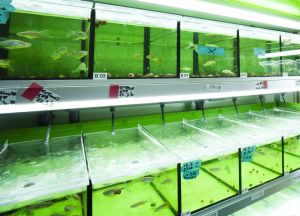
Zebrafish share most organ systems with humans. This makes them ideal model organisms to study the causes of human diseases like cancer or heart diseases. For this purpose, research needs a variety of zebrafish lines. With the European Zebrafish Resource Center (EZRC), Karlsruhe Institute of Technology (KIT) is now opening the first central repository for such lines in Europe. The EZRC is funded jointly by the Biointerfaces programme of the Helmholtz Association and the Klaus Tschira Foundation. The Klaus Tschira foundation provides a funding of 1.5 Million Euro over three years.
Representatives of the media are cordially invited to come to the official opening on Wednesday, July 18, 11 hrs on KIT Campus North.
“Zebrafish are robust, small, and reproduce quickly. Being vertebrates, they share most major organ systems with humans. This makes them ideally suited for biomedical research,” explains Professor Uwe Strähle, Head of the Institute of Toxicology and Genetics (ITG) that operates the Zebrafish Resource Center on KIT’s Campus North. “Zebrafish repair a spinal cord lesion, heart or kidney diseases or a damaged optic nerve all on their own. Their organ function is restored completely.”
Moreover, their eggs are transparent and develop outside of the body of the mother. This allows researchers to observe the development of organs or even individual cells in the embryo as well as in the larva, which is also transparent, without harming adult animals. Such experiments may replace numerous animal experiments with rats or mice. The fish are ideally suited to studying the causes of cancer, heart disease, and behavioral disorders and to evaluating potential drugs. In recent years, laboratories in Europe alone have generated thousands of zebrafish lines, each of which carries either a particular mutation that can serve as a model for human disease, or a fluorescent marker that labels a particular tissue. However, European researchers have been lacking a central repository to store and distribute these fish. The European Zebrafish Resource Center will meet this need in the future. The EZRC has over 3,000 aquaria for keeping live fish as well as freezers capable of holding about 80,000 sperm samples. The EZRC will also be the first zebrafish screening center worldwide, welcoming guest researchers who will perform systematic research on its collection. The scientists will be provided with technologies such as high-throughput synthesis of drug candidates, genome sequencing, and robotics and software developed in-house for sample handling, microscopy, and image analysis. The EZRC will also be the central hub of ZF-HEALTH, a recently started collaborative project funded by the European Commission’s 7th Framework Programme.
For more information, click: www.itg.kit.edu/ezrc
The grand opening ceremony of the EZRC will take place on Wednesday, July 18, 11 hrs, at the Leibniz Saal of the Fachinformationszentrum (FIZ) on KIT Campus North (building 240, Hermann-von-Helmholtz-Platz 1, 76344 Eggenstein-Leopoldshafen, Germany).
Program of the Opening Ceremony
All presentations will be given in German.
11.00 hrs Welcome addresses
Professor Doris Wedlich, Chief Science Officer, KIT
Professor Christiane Nüsslein-Volhard, Director of the Department of Genetics, Max Planck Institute for Developmental Biology, Tübingen
11.25 hrs “Warum Zebrafische und dann auch noch so viele?“ (“Why zebrafish and why so many?“)
Professor Uwe Strähle, Head of the Institute of Toxicology and Genetics, KIT
11.40 hrs “Zebrafische helfen die Komplexität des Gehirns zu verstehen” (“Zebrafish help understand the complexity of the brain”)
Professor Wolfgang Driever, Head of the Department of Developmental Biology, University of Freiburg
11.55 hrs Opening and opening film of EZRC
12.15 hrs Reception
About the Klaus Tschira Foundation
The Klaus Tschira Foundation (KTS) supports natural sciences, mathematics, and computing and wishes to further promote work in these areas. This is a federal undertaking that starts at the kindergarten level and continues through to schools, universities, and research institutions.
Further information: http://www.klaus-tschira-stiftung.de
About ZF-HEALTH
“ZF-HEALTH – Zebrafish Regulomics for Human Health” is a large-scale integrating project funded by the European Commission as part of its 7th Framework Programme, encompassing 19 partner organizations in nine countries, and coordinated by Karlsruhe Institute of Technology. The project started on July 01, 2010 and is scheduled to run over a period of five and a half years. Further information: http://zf-health.org
Karlsruhe Institute of Technology (KIT) is a public corporation according to the legislation of the state of Baden-Württemberg. It fulfills the mission of a university and the mission of a national research center of the Helmholtz Association. KIT focuses on a knowledge triangle that links the tasks of research, teaching, and innovation.
le, 11.07.2012
For further information, please contact:
Margarete Lehné
Presse, Kommunikation und Marketing
Phone: +49 721 608-48121
Fax: +49 721 608-45681
margarete lehne∂kit edu
The photo of printing quality may be requested by presse∂kit edu or phone: +49 721 608-47414. The press release is available as a PDF file.

Imperial College and MRC Clinical Sciences Centre, London, UK
Boris Lenhard's group: http://www.csc.mrc.ac.uk/Research/Groups/EPI/ComputationalRegulatoryGenomics/
On 01 November 2011 I am moving to Imperial College London (joint position with MRC Clinical Sciences Centre), together with part of my current group. We have four vacant positions in London, all on very exciting projects, and I would be very grateful if you could help me spread the word so I could fill them with the best possible people.
The positions are:
Postdoctoral career development fellow (computational biology)
http://www.jobs.ac.uk/job/ADD501/career-development-fellow/
Closing date: 25 September 2011
Scientific Programmer (Bioinformatics)
http://www.jobs.ac.uk/job/ADD353/scientific-programmer-bioinformatics/
Closing date: 25 September 2011
Postdoctoral researcher in computational genomics, on ZF-HEALTH project (EU FP7)
http://www.jobs.ac.uk/job/ADE532/post-doctoral-researcher-in-computational-genomics/
Closing date: 16 October 2011
Senior Research Bioinformatician/Scientific programmer, on ZF-HEALTH project (EU FP7)
http://www.jobs.ac.uk/job/ADE836/research-bioinformatician-scientific-programmer/
Closing date: 16 October 2011
Many thanks for your help,
Boris Lenhard
The BOLD Marie Curie Initial Training Network and the ZF-HEALTH Consortium are co-organizing a workshop for graduate students and junior postdoctoral researchers on "Cutting Edge Technologies in Biomedical Research", to be held on May 4-6, 2011 - Karlsruhe Institute of Technology (KIT), Germany.
Topics will include: High-throughput screening, 3D imaging, next generation sequencing, database resources, zinc finger nuclease knock-out, research management and ethics.
Speakers: Randall Peterson, Cambridge MA; Stefan Schulz, Karlsruhe; Holger Erfle, Heidelberg; Markus Reischl, Karlsruhe; Michael Boutros, Heidelberg; Jochen Wittbrodt, Heidelberg; Lars Hufnagel, Heidelberg; Clemens Grabher, Karlsruhe; Urban Liebel, Karlsruhe; Ferenc Mueller, Birmingham; Uwe Straehle, Karlsruhe; Boris Lenhard, Bergen; Lars Juhl Jensen, Copenhagen; Keith Joung, Cambridge MA; Tim Frayling, Exeter; Didier Stainier, San Francisco.
General information: There is no registration fee. Accommodation costs will be covered by the workshop organization, but participants are responsible for their own travel expenses. Applications must include a short CV including publication list, a brief statement of research interests and motivation for wanting to participate in this workshop and a supervisor's letter of support. Up to 30 participants will be selected by the ZF-HEALTH Consortium, half of these places are reserved for ZF-HEALTH participants.
The deadline is now extended to March 27, 2011.
Application form (RTF)
Workshop poster (PDF)
The ZF-HEALTH project website, http://zf-health.org, is now publicly accessible.
An archival version of the preceding ZF-MODELS website remains available at http://zf-health.org/zf-models/.
To mark the start of the ZF-HEALTH project, a kick-off meeting was held in Bad Herrenalb in the Black Forest on July 24 – 25, 2010, hosted by the Karlsruhe Institute of Technology. The meeting was attended by 22 senior scientists reprenting most of the Consortium partners, and Prof. Monte Westerfield representing the Scientific Advisory Board.
The agenda included a preview of the work to be performed in each of the work packages and discussions on strategies for mutants selection, phenotyping and chemical screens, as well as on intellectual property issues. The Consortium endorsed proposals to hold the first ZF-HEALTH workshop in Karlsruhe and the next project meeting in Zürich, in the summer of 2011.